• home
  • vocab
  • tutoring
  • blog
  • help

Make Your Point > Archived Issues > CONFLATE

Send Make Your Point issues straight to your inbox.


pronounce CONFLATE:

kun FLATE
Your browser does not support the audio element.


connect this word to others:

(Source)

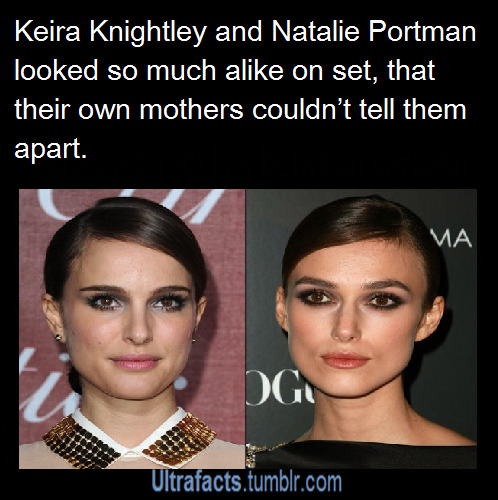
I guess I'm not the only one who tends to conflate Keira Knightley and Natalie Portman, meaning I mix them up: mistake one for the other, or accidentally merge the two in my mind.

If you look closely at the word conflate, you can see how it most literally means "to blow together." It's based on the Latin flare, "to blow, or to puff." So, conflate is cousins with words like inflate, deflate, souffle, and, LOL, flatulence.

You can think of conflating as a kind of mental error: a glitch in the mind, much like con___ulating ("accidentally inventing things to fill a gap in your memory"), or com___mentalizing ("isolating what ought to be interrelated pieces of information in your mind") or anthrop______izing ("assuming that something non-human has certain human qualities").

(To reveal any word with blanks, give it a click.) 

definition:

"Conflate" has Latin bits that literally mean "to blow together," and that's what it first meant in English, back in the late 1500s: to blow together, to fuse together, or to come together into a whole from various separate parts.

By the 1800s, we were using "conflate" more specifically to mean "to fuse together two different readings of the same piece of text." From there, the meaning grew general again; today, "conflate" most often means "to blur two or more different things, or mix them up in a confused way."

That is, to conflate two or more things is to blur them together, and to conflate one thing with another thing is to mistake it for that other thing.

grammatical bits:

Part of speech:

Verb, usually the transitive kind: "I keep conflating Keira Knightley and Natalie Portman;" "I keep conflating Keira Knightley with Natalie Portman."

Other forms: 

The other verb forms are "conflated" and "conflating."

The noun is "conflation."

how to use it:

Pick the formal, semi-common word "conflate" when you want to point out how people's thoughts have muddied, blurring two or more things that ought to stay distinct.

Say that people are conflating things, or conflating things together, or conflating one thing and another thing: "You're conflating the poet and the speaker of the poem." "You're conflating the poet and the speaker together; they might not be the same."

Or, say that people are conflating one thing with another thing: "You're conflating the fictional speaker of the poem with the poet himself."

But if you're not trying to sound that serious, emphatic, or critical, just say "mistaking for" instead of "conflating with:" "You're mistaking the speaker for the poet."

examples:

"Capitalist culture... conflates someone's personality with the things they buy and consume."
  — Bijan Stephen, The Verge, 25 February 2020

"“The [art] critics are out of the game... These days it's dealers and collectors who build value, and artistic value has become conflated with price. That's the problem."
  — Todd Levin, as quoted by Scott Reyburn, New York Times, 9 January 2015

has this page helped you understand "conflate"?


Awesome, I'm glad it helped!

Thanks for letting me know!
If you have any questions about this term, please message me at Liesl@HiloTutor.com.


study it:

Explain the meaning of "conflate" without saying "merge" or "confuse."

try it out:

In Salon, Melanie McFarland explains how to avoid conflating animal shelters with animal rescues:

"The average person conflates the terms. A shelter, for example, might be any physical location where animals can be housed and cared for while waiting for adoption. Some are run by city or county agencies and funded by tax dollars... Defining a rescue is where the situation gets trickier. It could be an individual coordinating with a group of foster volunteers. It could be a team. A private rescue might have a facility that is open to the public and a paid staff, or it might be one person caring for cats in their home."

With this in mind as an example, talk about another pair of things that you've seen people conflate, and explain either how to avoid conflating them, or why we shouldn't conflate them.


before you review, play:

Try to spend 20 seconds or more on the game below. Don’t skip straight to the review—first, let your working memory empty out.

Our game this month is "Name the Game!"

I'll share some tidbits about a particular board game with a one-word name, and you try to name it. 

You can scroll all the way down to see the game's real name. Maybe you'll come up with the correct name, or one that’s just as apt!

Try this one today:

The game's name is 4 syllables.

It starts with U.

"Defeat the boss, a world-ending menace that threatens the very way of life in your star system. Even as a heroic figure with cosmic potential, you won't be capable of such a monumental task at the start."

review this word:

1. A near opposite of CONFLATE is

A. BURST.
B. PAY FOR.
C. DISTINGUISH.

2. As Zoƫ Schiffer noted in The Verge, a "rumor succeeds by conflating grains of truth _____ lies that stoke people's fears."

A. by
B. with
C. among


Answers to the review questions:
1. C
2. B

From the game: Unstoppable.


a final word:


I hope you're enjoying Make Your Point. It's made with love.

I'm Liesl Johnson, a reading and writing tutor on a mission to explore, illuminate, and celebrate words.


From my blog:
On vocabulary...
      36 ways to study words.
      Why we forget words, & how to remember them.
      How to use sophisticated words without being awkward.
On writing...
      How to improve any sentence.
      How to motivate our kids to write.
      How to stop procrastinating and start writing.
      How to bulk up your writing when you have to meet a word count.

From my heart: a profound thanks to the generous patrons, donors, and sponsors that make it possible for me to write these emails. If you'd like to be a patron or a donor, please click here. If you'd like to be a sponsor and include your ad in an issue, please contact me at Liesl@HiloTutor.com.


A disclaimer:
When I write definitions, I use plain language and stick to the words' common, useful applications. If you're interested in authoritative and multiple definitions of words, I encourage you to check a dictionary. Also, because I'm American, I stick to American English when I share words' meanings, usage, and pronunciations; these elements sometimes vary across world Englishes.

Subscribe to "Make Your Point" for a daily vocabulary boost.


© Copyright 2025 | All rights reserved.